Serverless architecture proposes completely delegating server management to the cloud provider (such as AWS, Azure, or Google Cloud). You write functions; they take care of everything else: infrastructure, scaling, load balancing, etc.
# How Does It Work?
When an event occurs (for example, an HTTP request), a previously defined function is executed. These functions live in the cloud and run only when needed. There are no servers to keep on all the time.
# Advantages
-
verified
Pay-per-Use
You don't pay for idle time; only when your code is running.
-
verified
Automatic Scaling
Automatic scaling based on demand without manual intervention.
-
verified
Total Abstraction
Total freedom from server maintenance concerns.
# Disadvantages
-
warning
Debugging Complexity
Greater difficulty in debugging or monitoring ephemeral executions.
-
warning
Cold Start
Initial latency in the first execution after idle time.
-
warning
Vendor Lock-in
Strong dependence on the cloud service provider.
# Everyday Analogy
Imagine you have a coffee shop, and you only open the kitchen when a customer arrives. You don't have employees all day; you only hire cooks per order. That's how Serverless works: code that runs on demand.
# Technical Example: Alert System
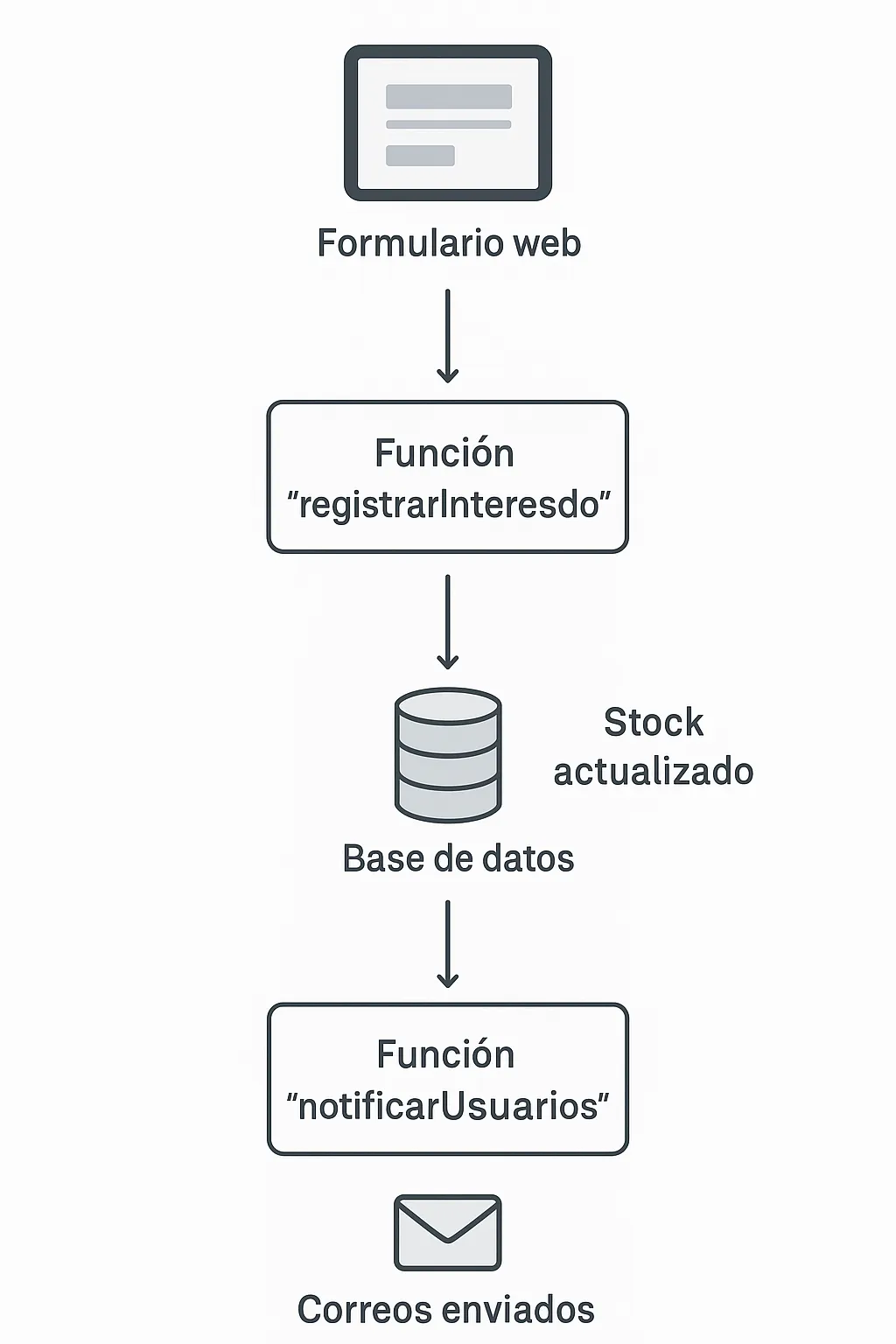
Imagine an application that allows users to sign up for alerts when a product is back in stock. With Serverless architecture, there's no server constantly running. Instead:
- When a user submits the form, a function is triggered that saves the email in a base database.
- When the product is back in stock, another function is automatically activated and sends emails to all interested users.
- All of this happens "on demand," without having a backend running 24/7.
Conceptual Code Snippet
// Function that runs when a user register
function registerInterested(event) {
  const email = event.body.email;
  saveToDatabase(email);
  return { statusCode: 200, body: 'Registration successful' };
}

// Function that runs when a product is back in stock
function notifyUsers(product) {
  const list = getInterestedEmails(product.id);
  list.forEach(email => sendEmail(email, product.name));
}
# When Is It Convenient to Use It?
It's ideal for short tasks, automations, lightweight APIs, backends for mobile apps, edge event processing, bots, and MVPs that must scale quickly without maintaining complex infrastructure.
# Conclusion
Serverless doesn't mean "without a backend," but rather "without servers managed by you." It's a great option for many modern scenarios, but it doesn't replace all models. Choose wisely according to your needs.