// The basics
Array (vector, matrix), a type of variable that allows storing more than one value, one of the fundamental tools for programming.

# Arrays (Arrangements - Vectors - Matrices)
Previously, we saw that a variable is like a box that stores a value. An array or arrangement is a type of variable that stores a set of values, that is, it has more than one value.
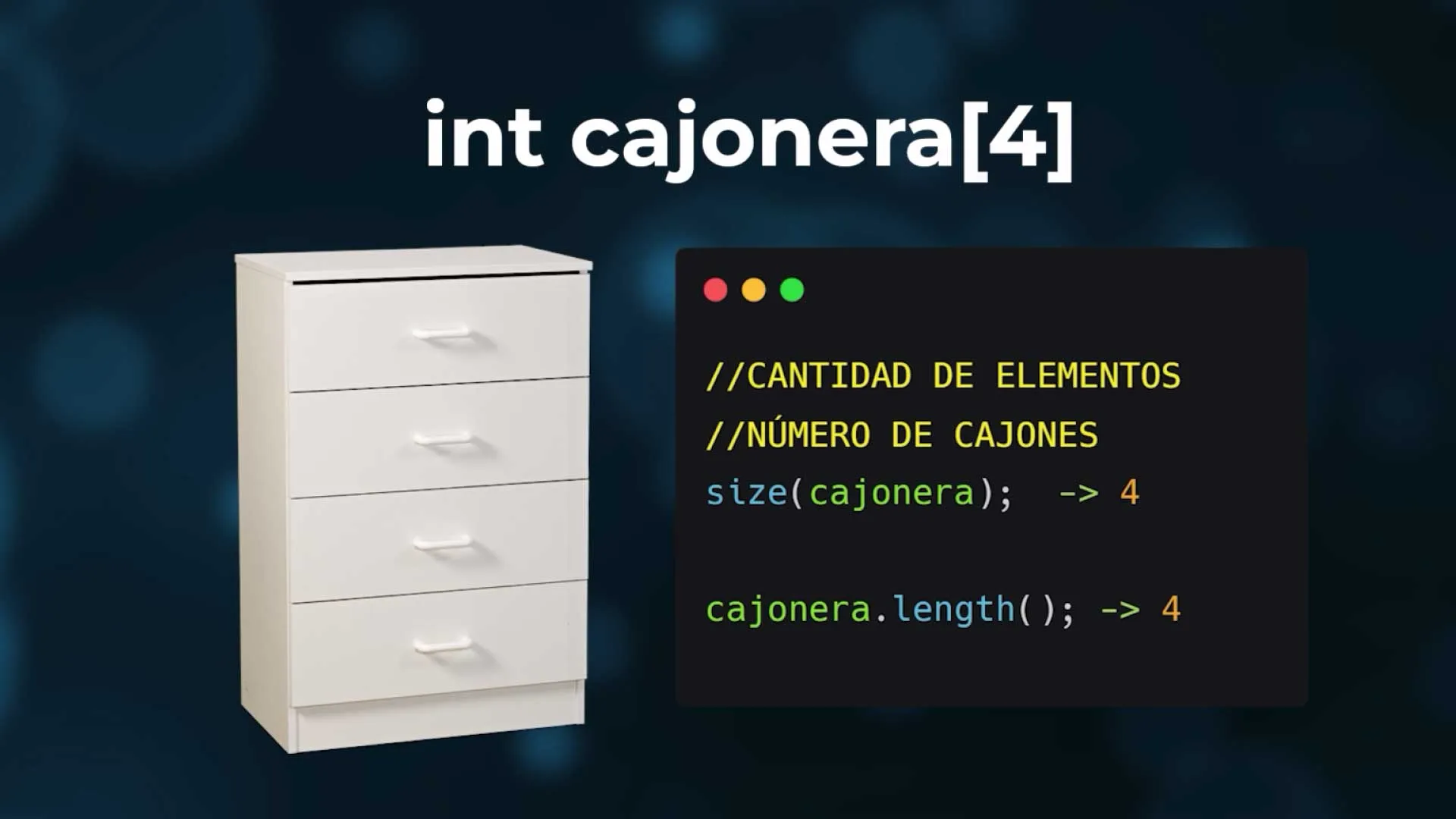
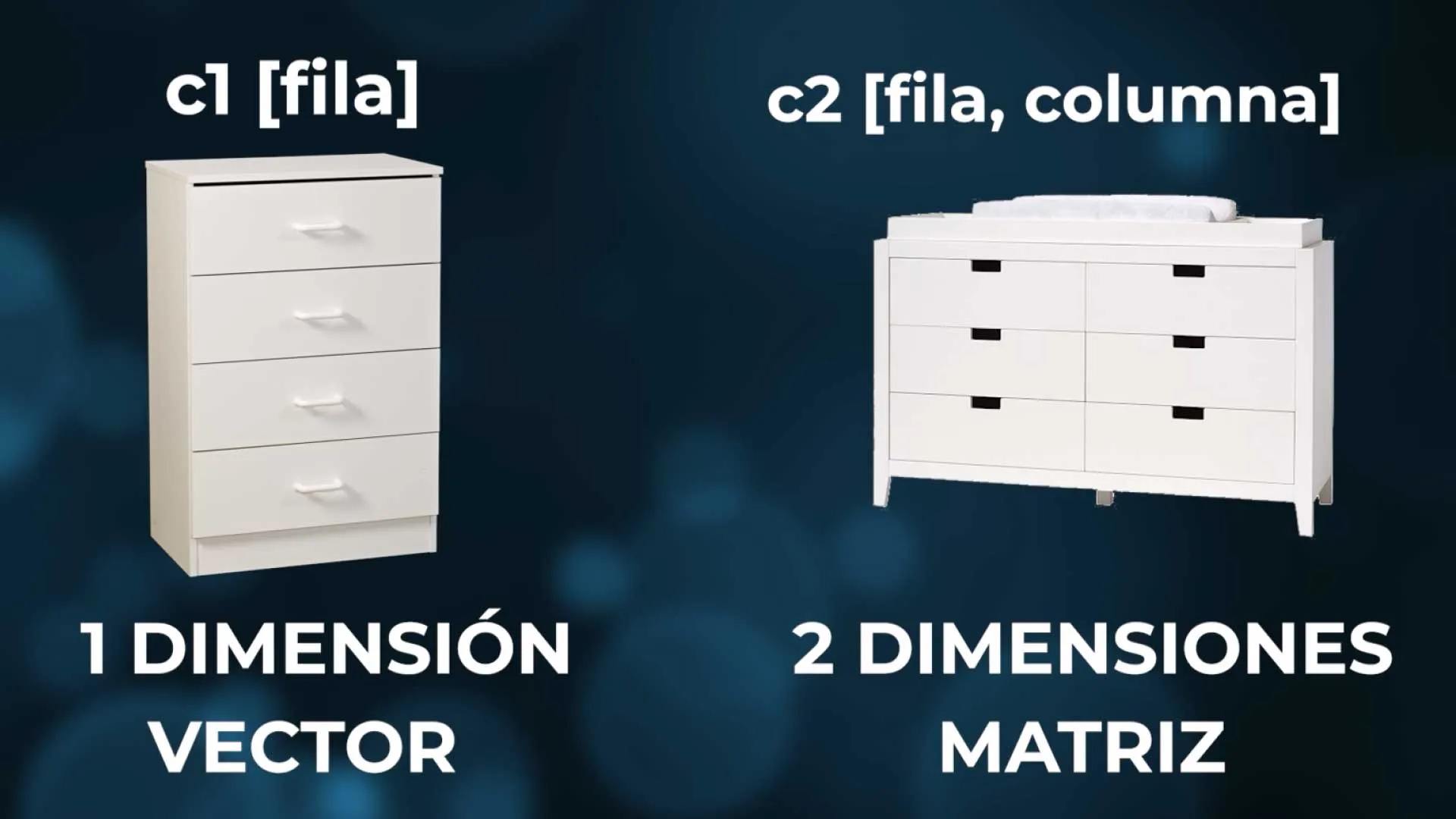
We can see it as a piece of furniture with drawers, a chest of drawers. Each drawer is identified with a position: the top one, the middle one, the last one. If we see it with numbers it could be drawer zero, one, two.
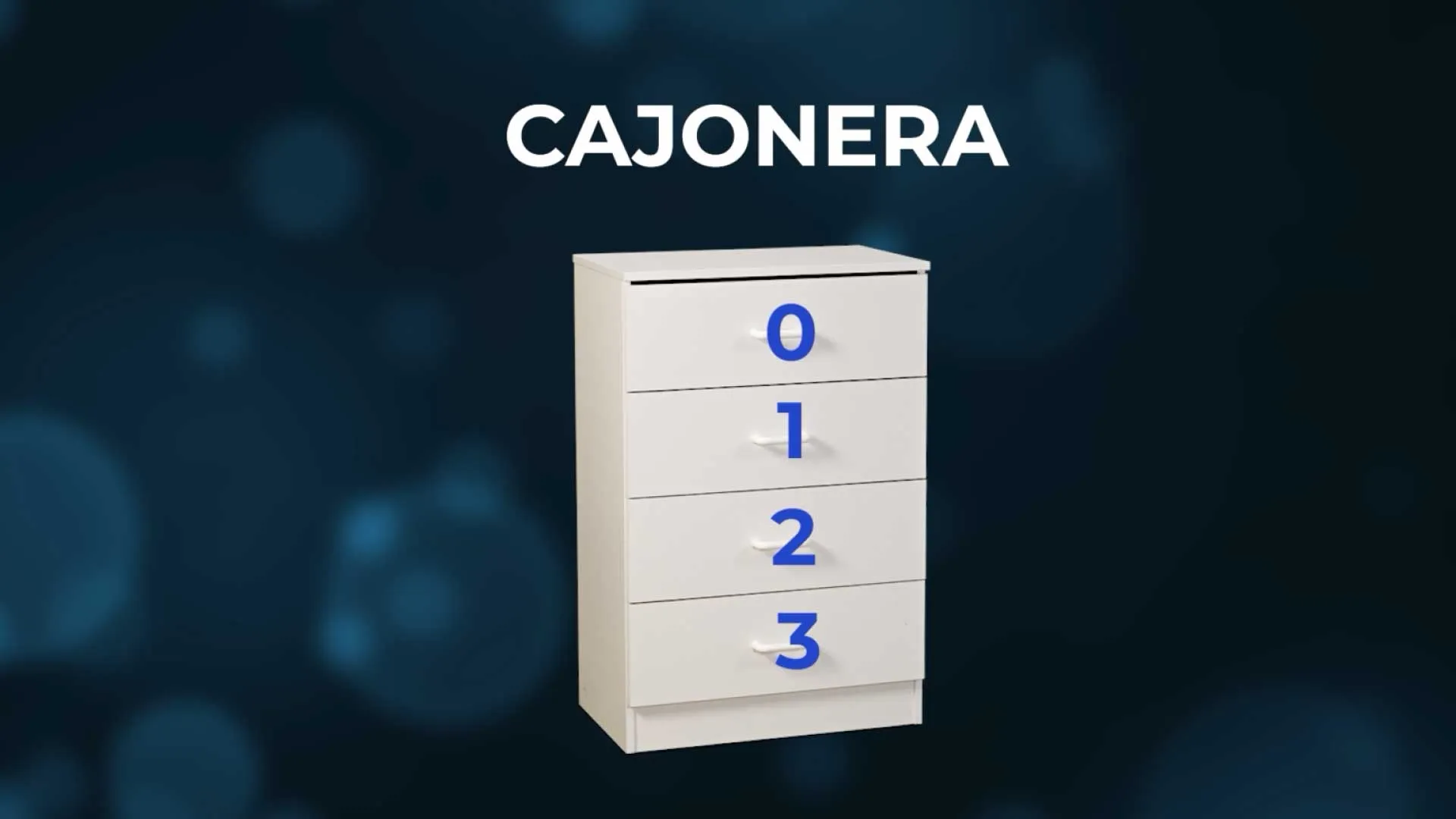
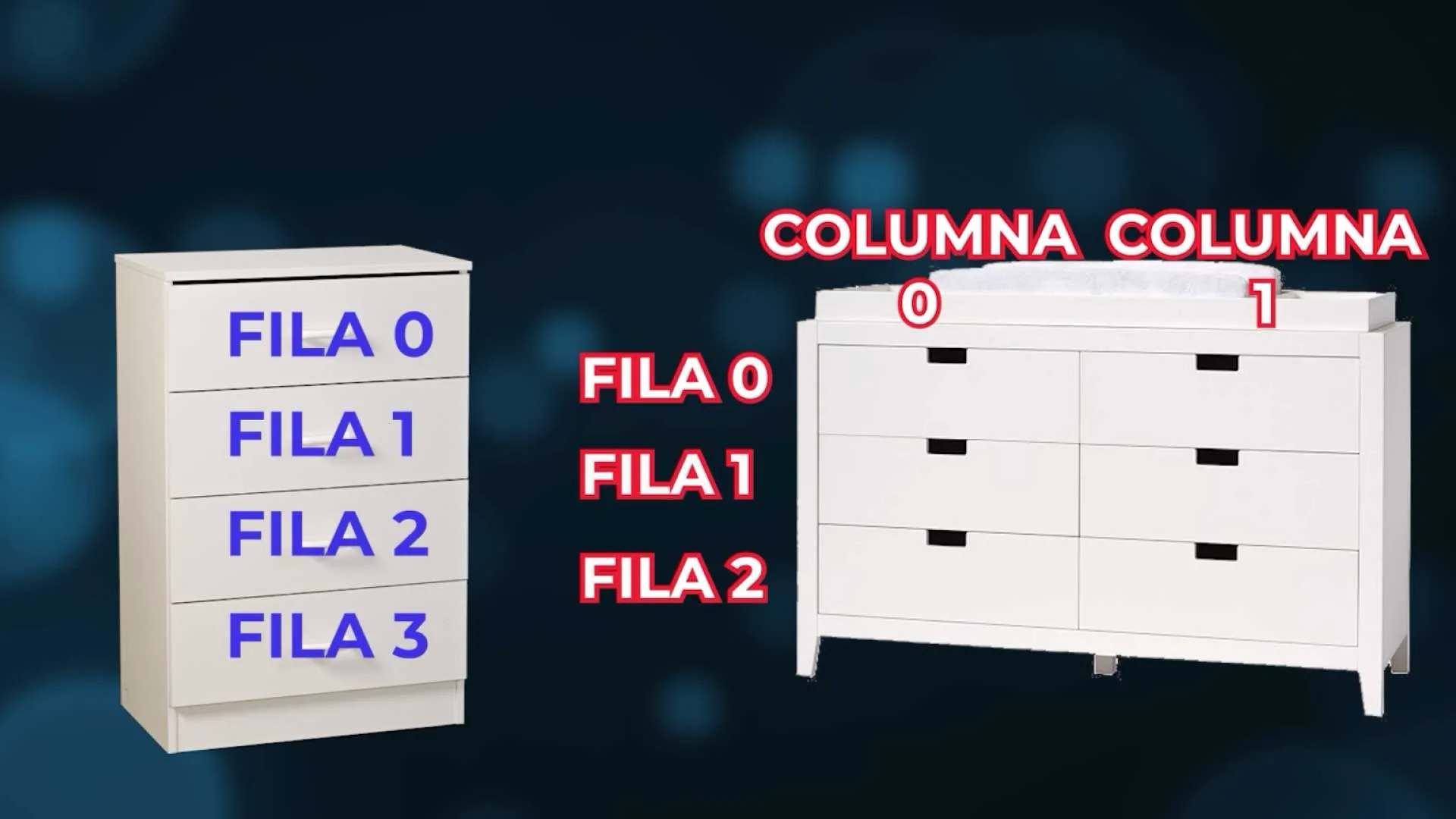
We can also see it as if they were rows.
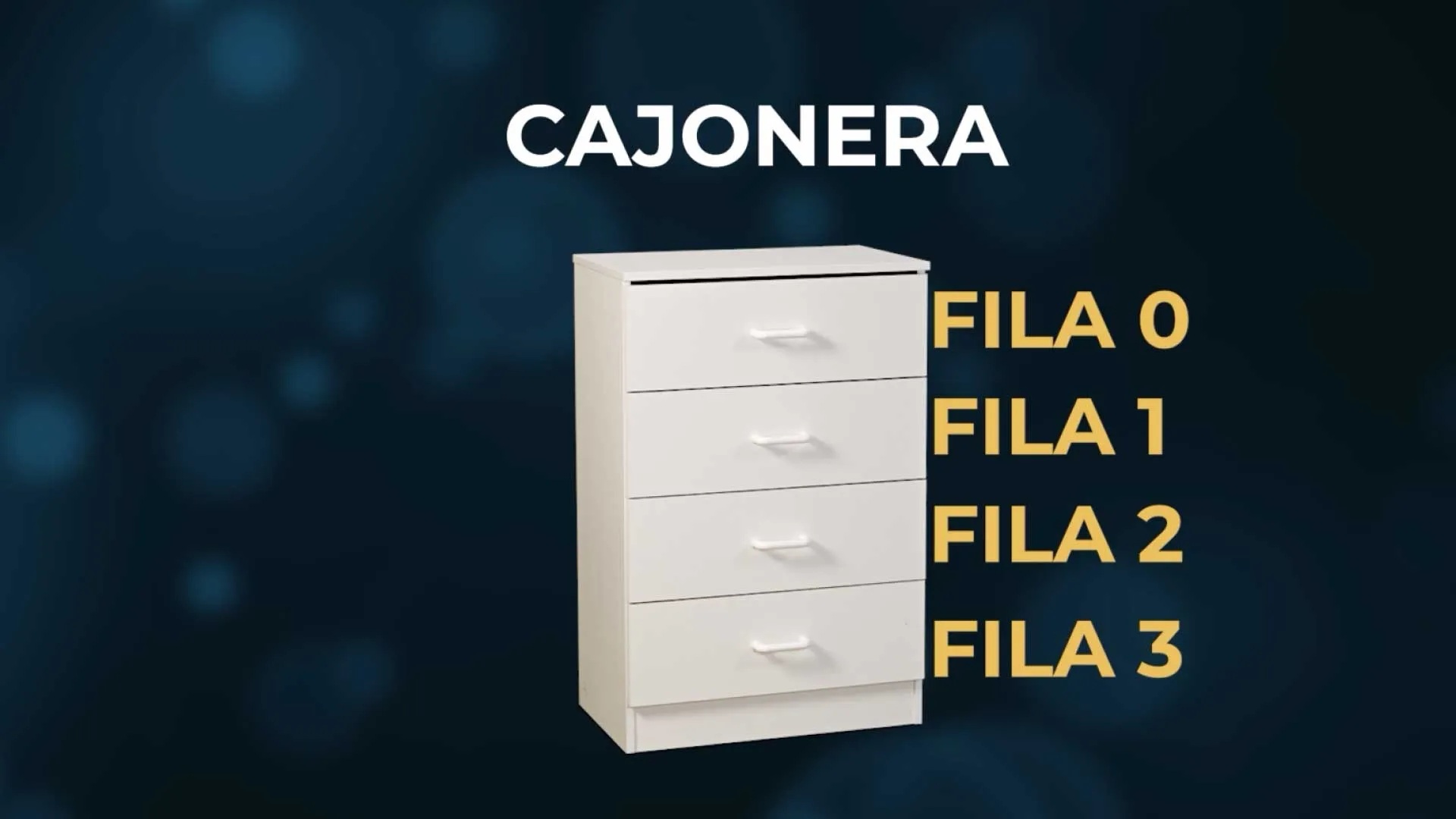
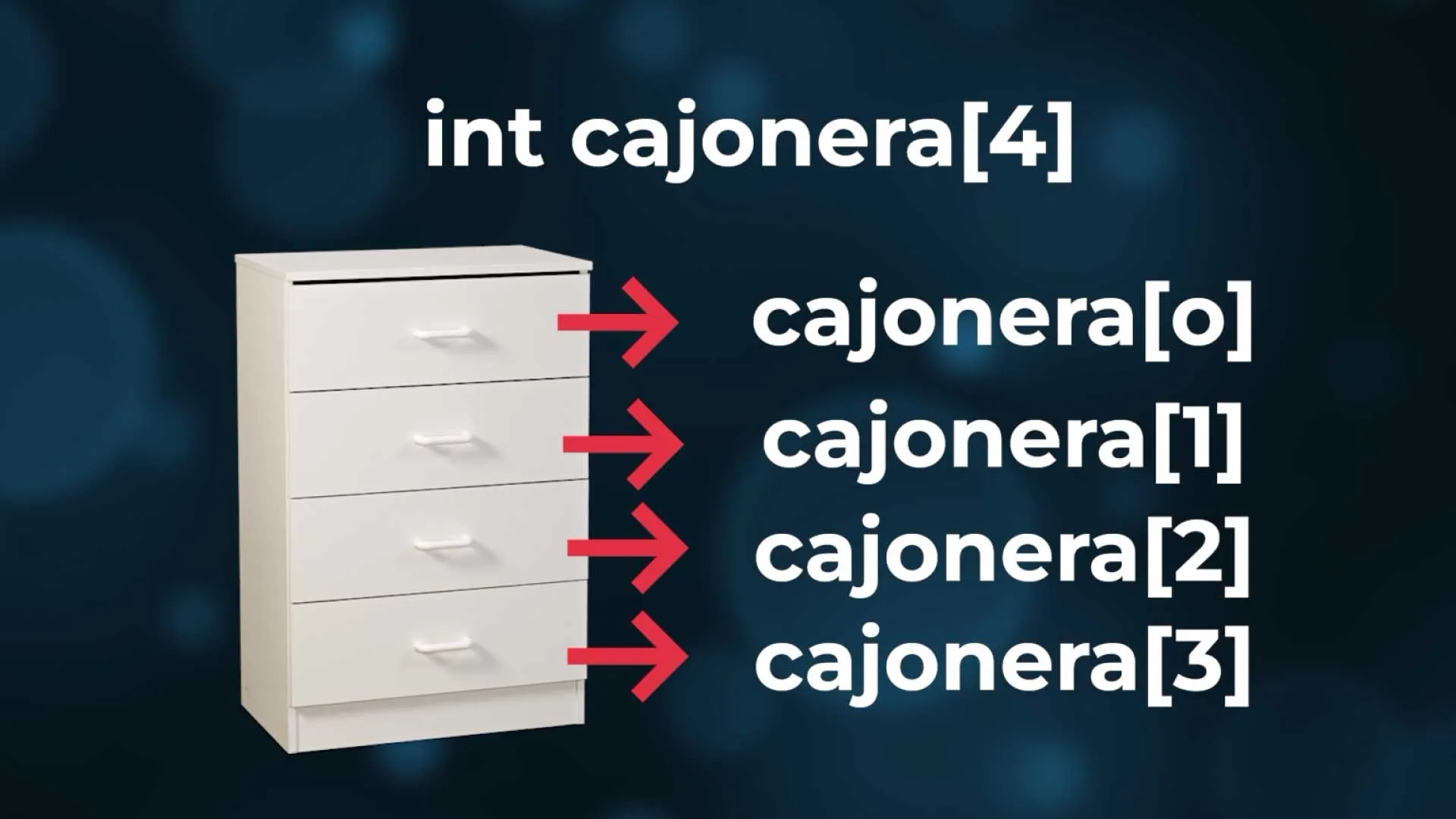
In other words, to access each element of the vector we use an index, the position. I always identify each element of the array with its position, the row.
If we want to access the first value (index zero) chest_of_drawers[0], the second chest_of_drawers[1] and so on.
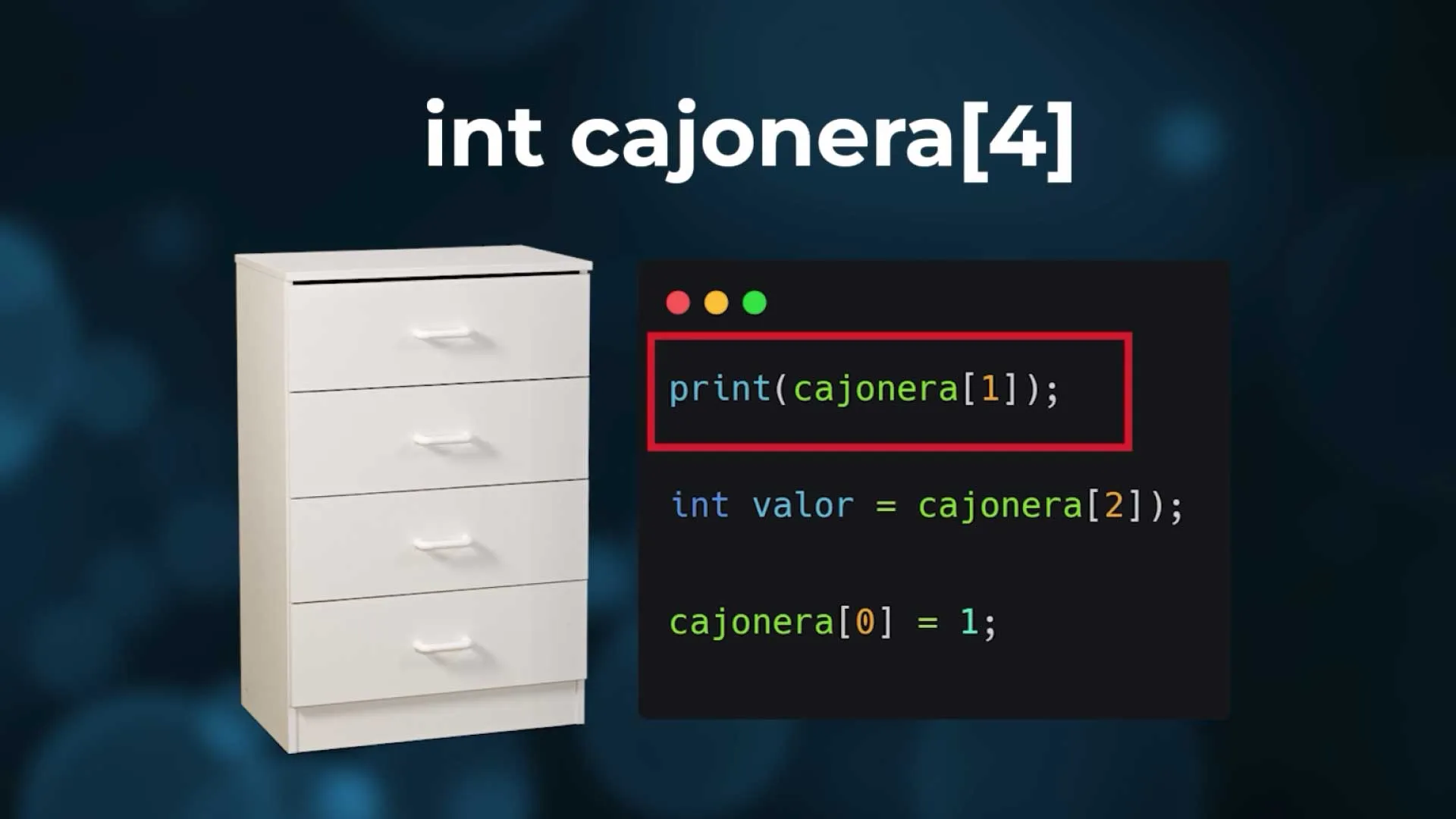
Whether to print the value, to see the value, or to change its value.
The number of drawers is the number of elements in the vector. length, size, are the ways to access this value, the functions that languages usually bring.
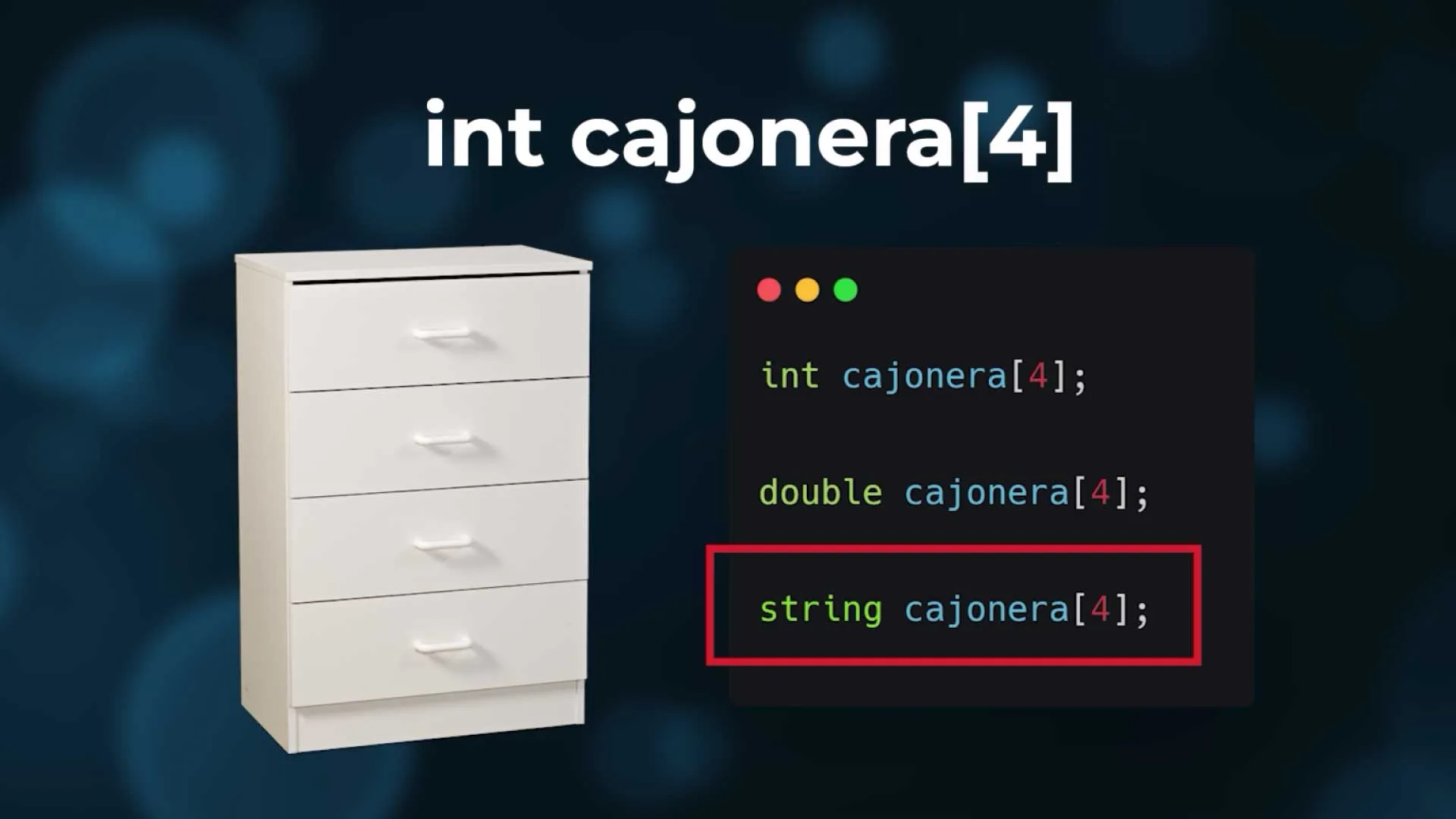
The array, like any variable, is of a data type. It can be an array of integers, an array of decimals, an array of strings.
In this case we saw that we had rows, but we can also have columns of drawers, what is known as a two-dimensional array: matrix.
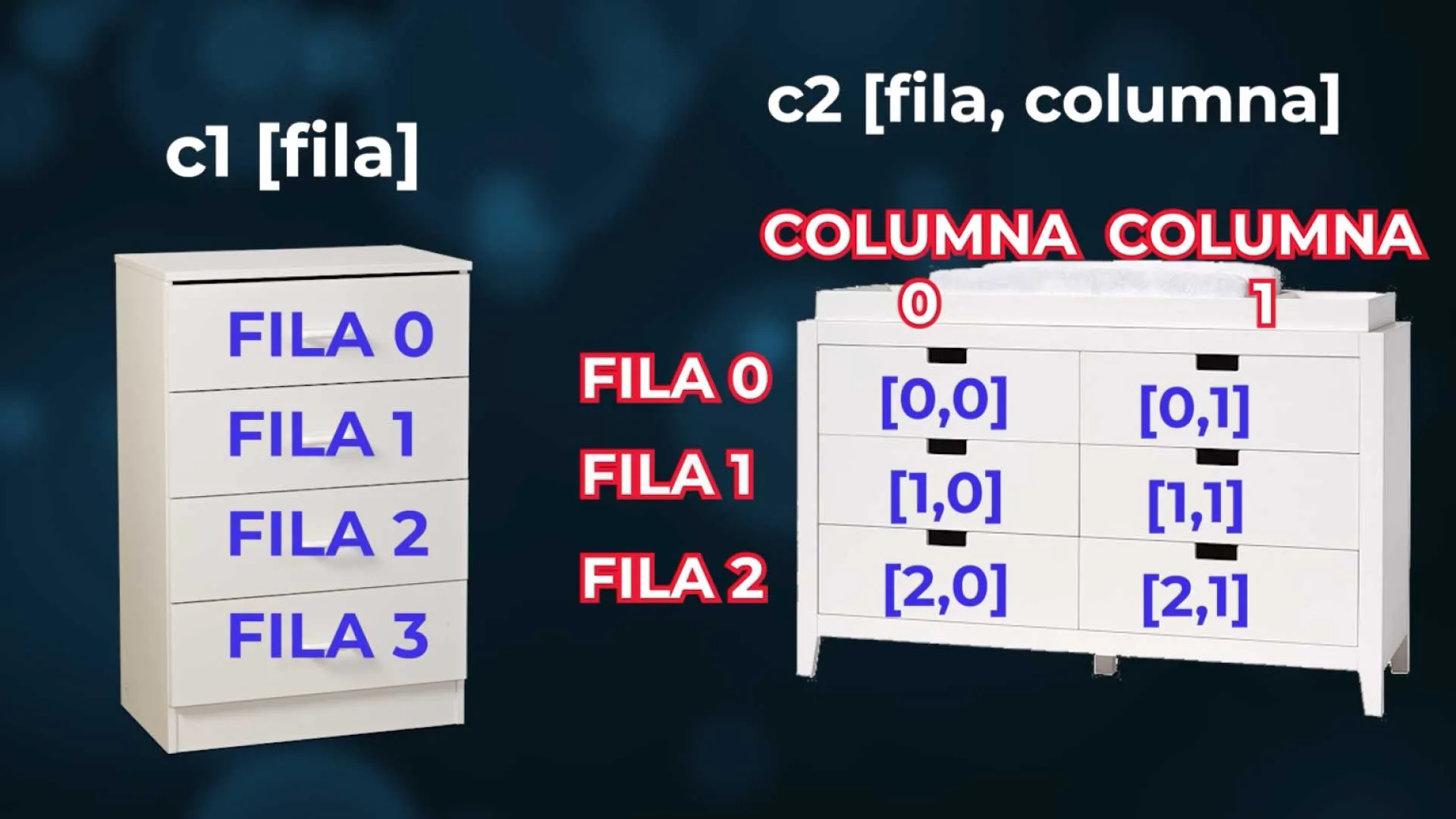
Each drawer is now identified with two indexes: row and column. The drawer[0][0], drawer[0][1], drawer[1][0]. I use one index to identify the row and another for the column.
An array of integers, I assign value to a position, I print the value.
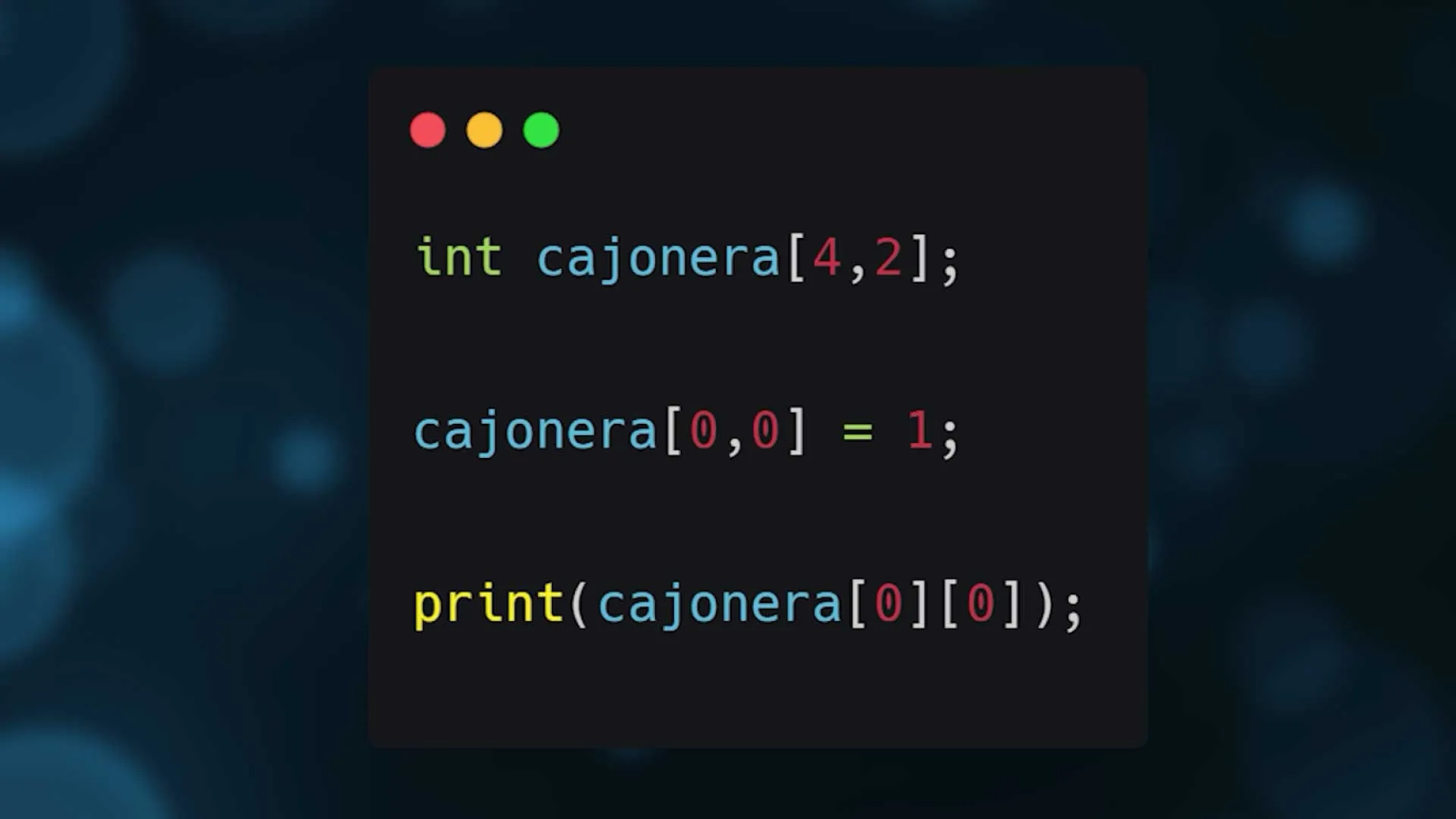
The dimension is the number of indexes we need to identify an element. A single dimension is called a Vector; more than one dimension is called a Matrix. The most common is 2 dimensions.
But there are also 3 dimensions, which we can see as a cube.
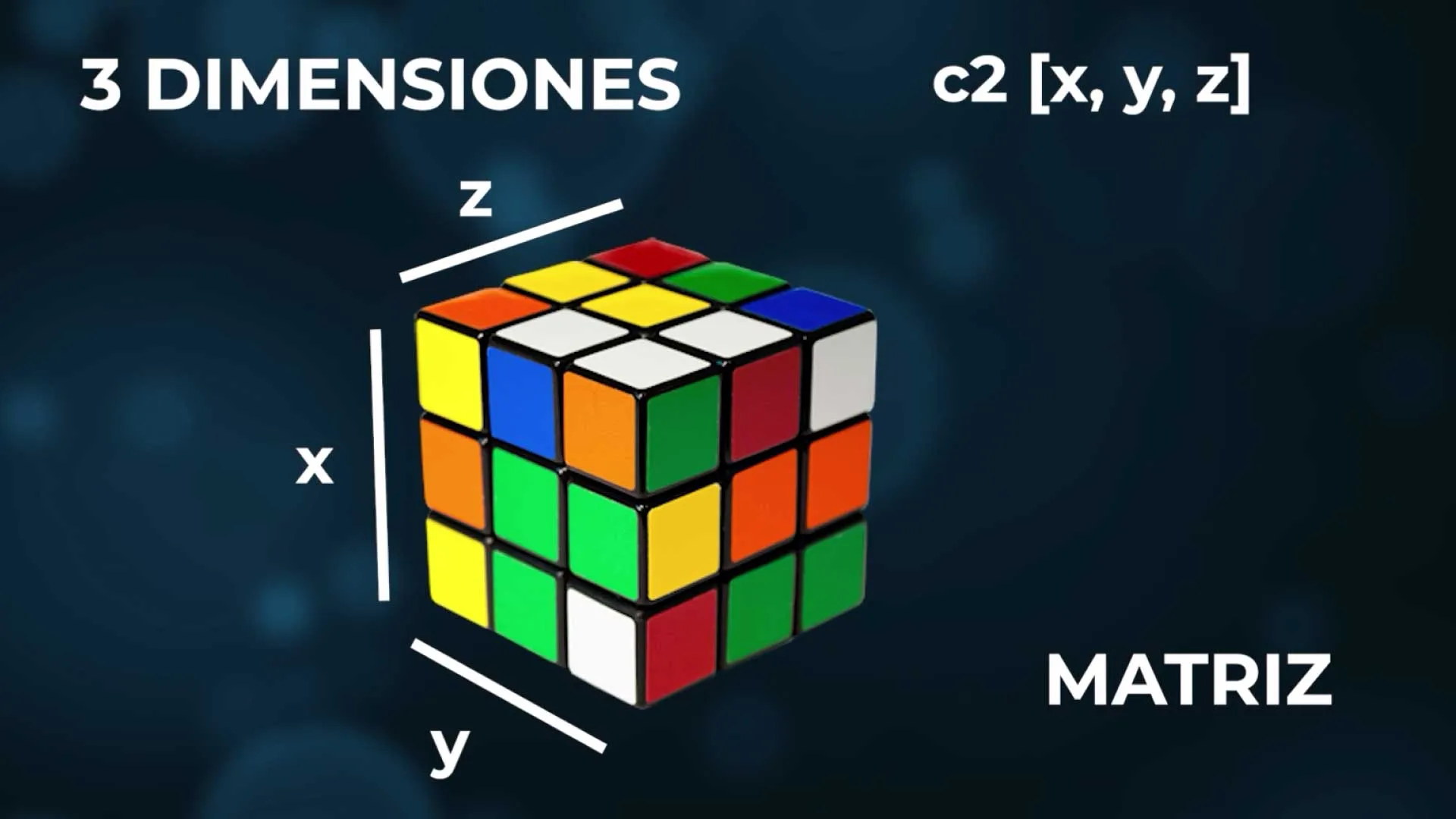
Anything from 4 dimensions onwards escapes what we can imagine, since our reality is in 3 dimensions, but matrices of more dimensions are also used.
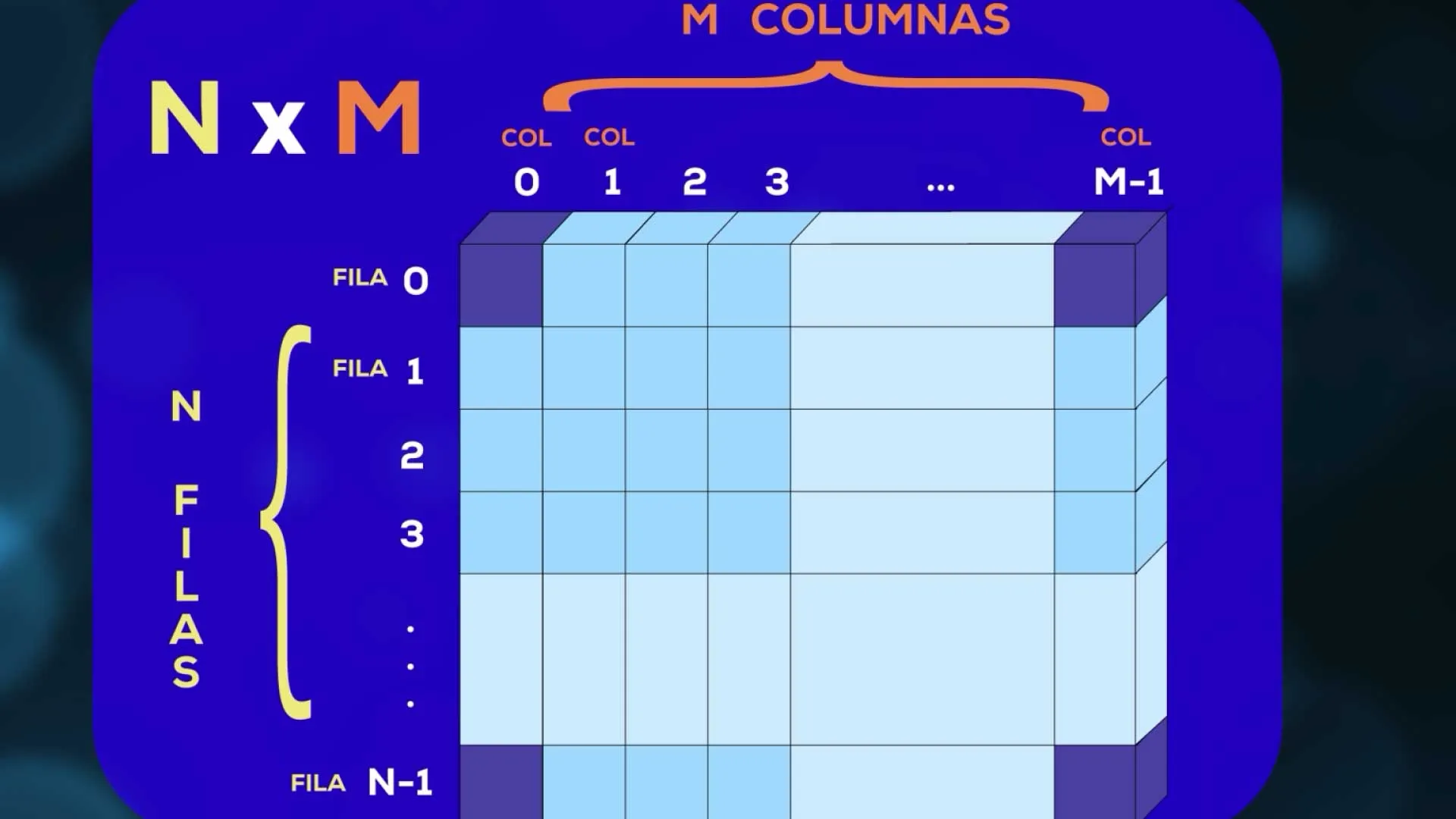
An array is usually identified by its number of elements: we say that a matrix is n by m if it has n rows and m columns, where n and m are any natural number.
That's as far as we go with the theme of arrays and this introduction to programming. These are the basic themes that a programmer must master, and the only way to achieve it is by practicing. It is not enough to just read theory; doing programming logic exercises is fundamental.