In this article we will see functions (and also procedures). These components are the fundamental bricks for building scalable and maintainable software.
# Divide and Conquer (functions)
With this phrase "divide and conquer", attributed to Julius Caesar, the Romans found an extremely effective strategy for politics and war.
This is an idea that also applies to problem solving. Given a complex problem, we divide it into parts or subproblems, which are simpler to solve.
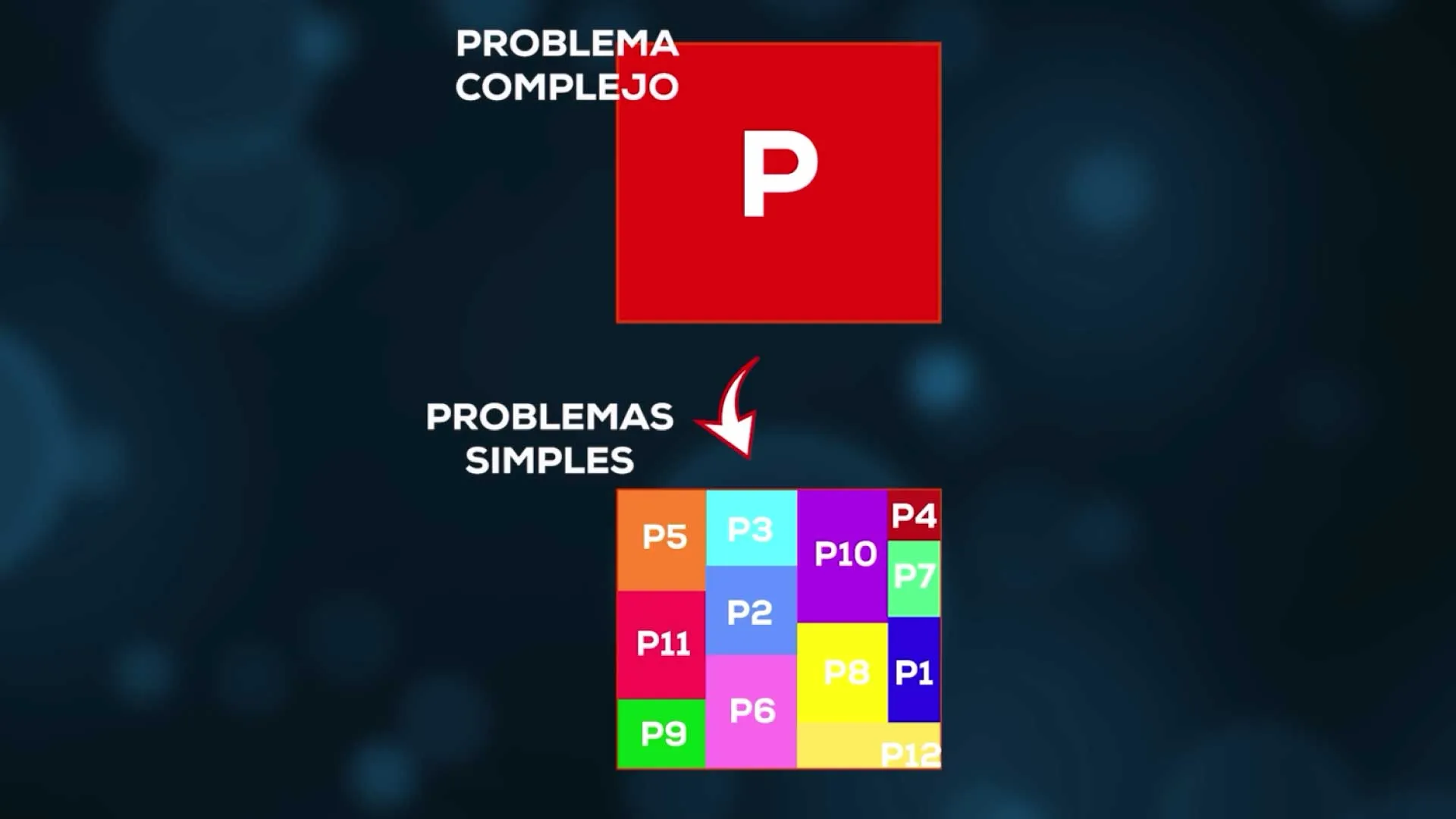
Once the solution for each of the parts or subproblems is found, we combine them and solve the main problem.
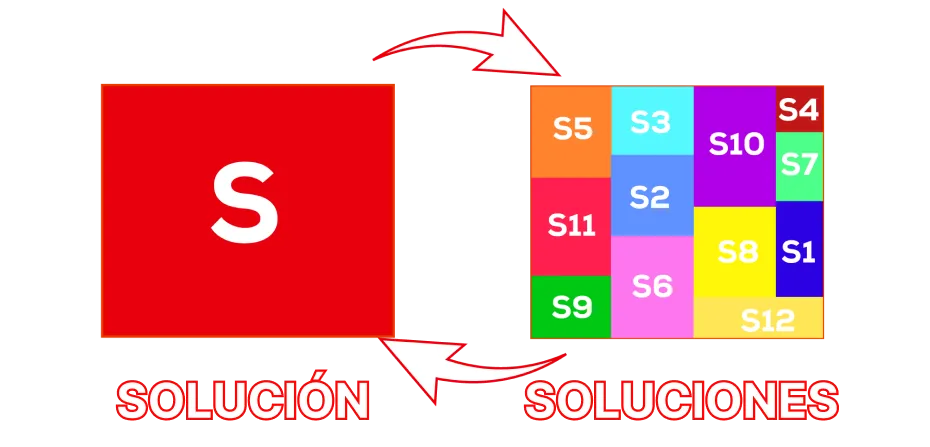
We call each part a module, and the entire process, modularization. Each module solves some of the subproblems that make up the original problem.
info Technical Note: Modularity and Coupling
Modularization not only simplifies logic, but also allows managing coupling (the dependency between modules) and cohesion (how focused a function is on a single task). A good modular design reduces the technical debt of the project.
# Functions
Functions are blocks of code that perform specific tasks. They divide large tasks into several smaller tasks, and allow reusing what we already did, or even what others did, instead of starting from scratch.
# Structure of Functions
A function has the form:
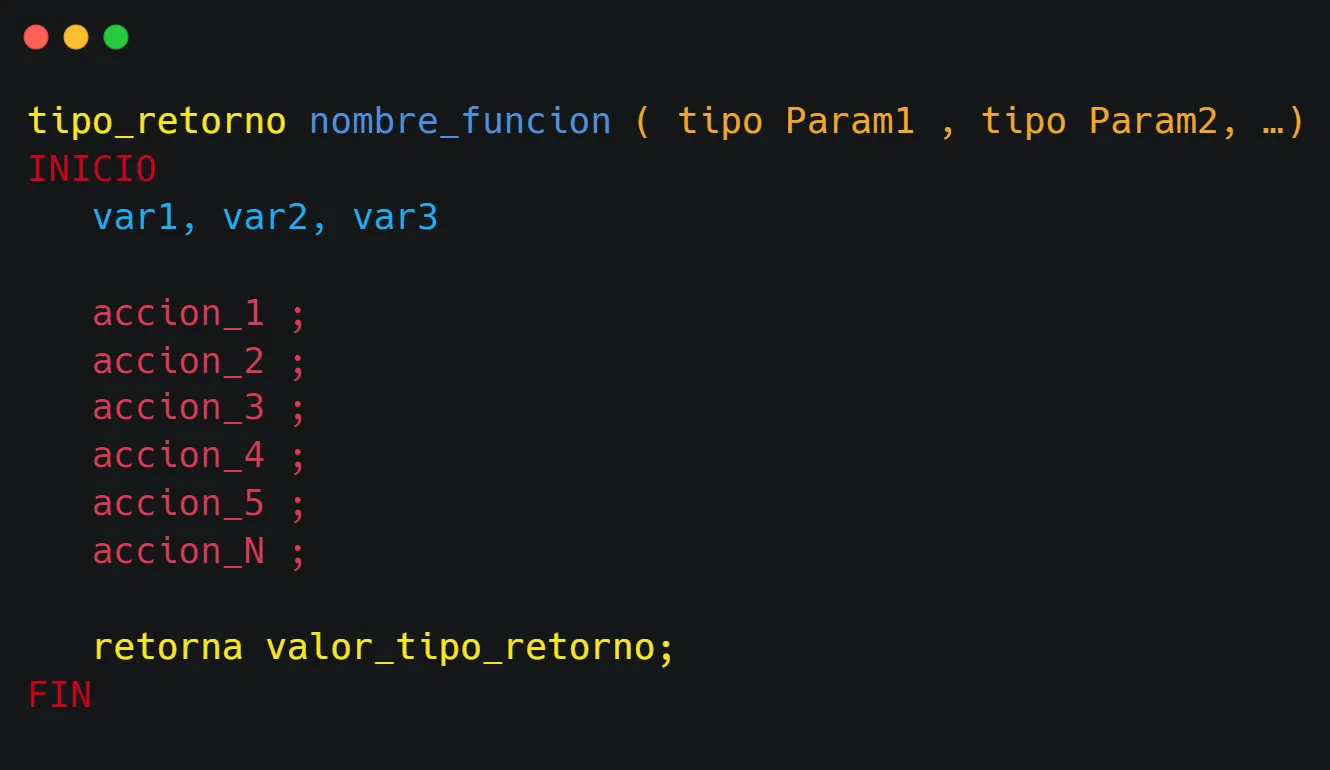
The name of the function, the data type it returns and between parentheses the parameters, separated with ",", each with its type.
Finally, it returns the result to the caller.
# Parameters and Variables
Parameters are variables used to put data inside the function, because the function doesn't know what's outside; it only knows what is declared inside and the parameters.
return_type function_name()
? Global variables
There are variables that are declared outside, called global variables, which can be used anywhere in the program. In programming, it is recommended not to use, or use as few global variables as possible to avoid unexpected side effects.
# Procedures
Some functions do not return a value; in that case, the return type is void. They are called procedures; they take care of some task but return nothing.
void function_name (params)
# Example: Sum Function
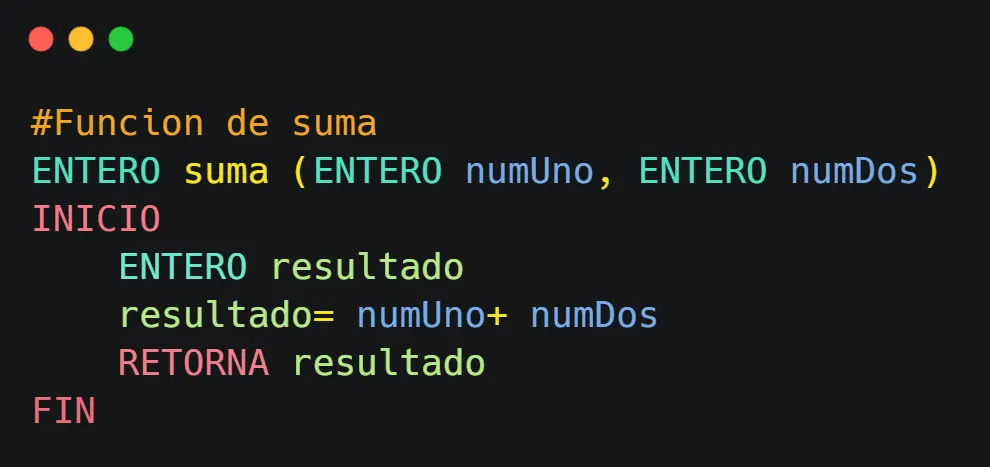
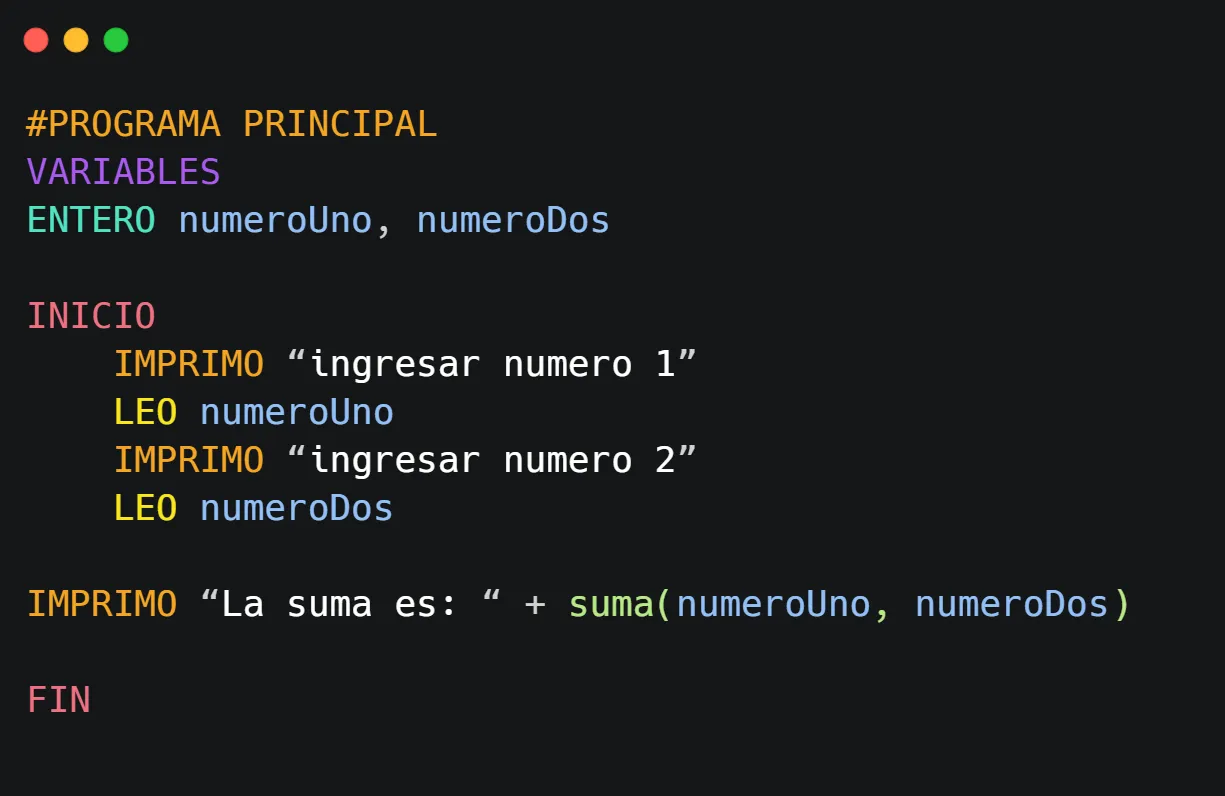
We need to build the main program, which loads the data, calls the sum function and prints the result.
# Parameter Passing
There are two types of parameter passing: Value and Reference.
By Value
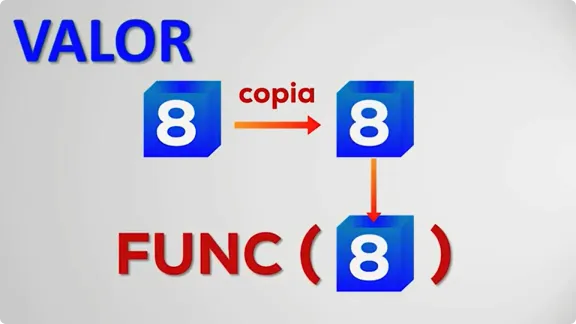
// Copy of the data, does not affect original.
By Reference
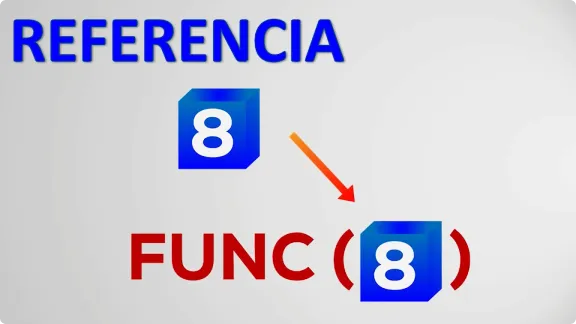
// Memory address, modifies original.
# Practice Exercises
Create a converter function (currency, amount) for pounds, dollars, and yenes.
DECIMAL converter (STRING currency, DECIMAL amount)
START
  DECIMAL conversionRate
  IF (currency == "pound") THEN
    conversionRate = 1.22
  ELSE IF (currency == "dollar") THEN
    conversionRate = 0.75
  ELSE IF (currency == "yen") THEN
    conversionRate = 0.009
  ELSE
  START
    PRINT "Invalid currency"
    RETURN -1
  END
  RETURN amount * conversionRate
ENDCalculate the daily wage based on day/night shifts and weekend bonuses.
DECIMAL calculateWage (INTEGER hours, STRING shift, STRING day)
START
  DECIMAL baseRate, increase, finalRate
  IF (shift == "night") THEN
    baseRate = 12; increase = 0.15
  ELSE
    baseRate = 10; increase = 0.10

  IF (day == "saturday" OR day == "sunday") THEN
    finalRate = baseRate + (baseRate * increase)
  ELSE
    finalRate = baseRate
  RETURN hours * finalRate
END